
Integrating Industrial Manufacturing in Partnership Marketing

Samantha Gadenne began her career in the Land O'Lakes test kitchen. From there, she moved to selling machines in the agriculture process automation space and stumbled into partnerships as she worked to sell the global leads she received.
Slowly she developed a playbook for building effective sales and marketing partnerships, across another machine vendor, and then with a European software startup.
Her real-world experiences, including inspiring wins and frustrating failures, infuse her insights with actionable and relevant tips for industrial manufacturers who realize the way buyers buy is changing quickly.
Connect with Samantha for her periodic posts on building effective marketing partnerships.
Website |
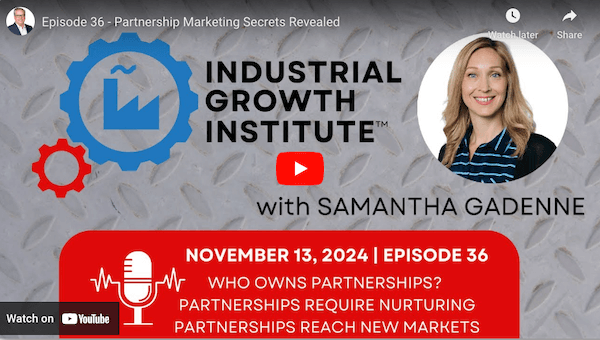
Turning Industrial Partnership Marketing from Theory into Revenue - Samantha Gadenne on Industrial Growth Insitute Episode 36
Episode Recap
Summary
Samantha Gadenne, Director of Portfolio Development at EIT Food, joins the podcast to talk about her experience implementing partnerships in the agri-food industry.
Samantha shares her insights and experiences in building successful partnerships and highlights the importance of:
- being open, curious, and asking questions
- set clear expectations, determine the mutual benefits for both parties, and establish a partnership framework
- cultural differences in partnership approaches between Europe and the US
She explains that partnerships are a long-term investment that can expand resources and open doors to new markets and technologies. It is important to be intentional and proactive in building partnerships, rather than relying on passive collaboration.
Success in partnerships requires clear communication, regular meetings, and problem-solving. It is crucial to set expectations and address issues such as intellectual property and exclusivity early on.
Companies should allocate sufficient time and resources to partnerships, understanding that it may take time to see concrete results. She recommends starting with someone within the sales or marketing team who has a propensity for partnerships. Cultivating each other's audiences can be achieved through cross-posting, articles, newsletters, and trade shows. It is important to think outside the box and be open to partnerships with companies in different industries.
Takeaways
- Partnerships in industry require being open, curious, and asking questions.
- Setting clear expectations and determining mutual benefits are crucial for successful partnerships.
- Pilot projects can help flesh out expectations and demonstrate the value of partnerships. Partnerships are a long-term investment that can expand resources and open doors to new markets and technologies.
- Success in partnerships requires clear communication, regular meetings, and problem-solving.]
- It is important to set expectations and address issues such as intellectual property and exclusivity early on.
- The success of partnerships can be measured through various metrics, such as the number of clients, engagements, or revenue generated.
- Companies should allocate sufficient time and resources to partnerships, understanding that it may take time to see concrete results.
- Cultivating each other's audiences can be achieved through cross-posting, articles, newsletters, and trade shows.
- Getting started with partnerships involves thinking outside the box, exploring opportunities with current customers, and having someone in the company who is passionate about partnerships.
Takeaway Quotes from Samantha Gadenne
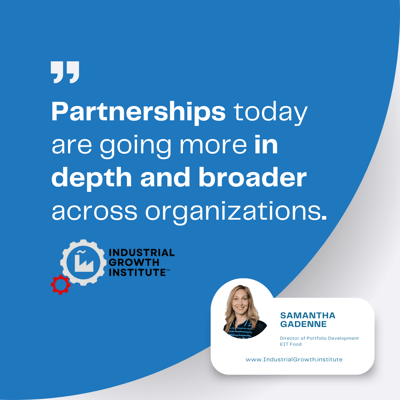
- "Partnerships today are going more in-depth and broader across organizations."
- "Money talks. Show how the partnership can open up new markets and access new technologies."
Outline
00:00 Introduction and Background
03:01 The Journey of Implementing Partnerships
09:43 Insights into Middle Market Industrial Manufacturing
11:13 Understanding the Food Supply Chain and Agriculture
14:14 The Evolution of Partnerships and Preconceptions
16:08 Moving Beyond Indirect Sales Channels
20:27 Sharing Information and Creating Business Value
23:00 Finding the Right Partners and Ideal Partner Profile
25:41 Cultural Differences in Partnership Approaches
30:12 Key Elements of Effective Partnerships
32:02 Fleshing Out Expectations and Gaining Management Buy-In
34:04 Successes and Failures in Partnership Execution
35:39 Knowing When to Pull the Plug on a Partnership
37:32 Building Visibility and Showcasing Technology
39:14 Active Engagement and Communication in Partnerships
41:19 Addressing Intellectual Property and Exclusivity
45:15 Measuring Partnership Success with Metrics
49:16 Partnerships in Tech vs. Manufacturing
56:22 Staffing for Partnerships: Sales or Marketing
59:36 Resources for Learning about Partnerships
Take a Deeper Dive into Partnership Marketing and Nearbound Sales Motions
Partnerships are an important part of a nearbound marketing and sales approach to build trust and reach buyers in a Zero Click world.
Content for a Zero Click World