
Chris Fox - Content Strategist and Video Marketing Expert
 Chris is a creator. He's been a journalist, heavy metal musician and critic, content strategist, and lately, a video creator for industrial manufacturers and OEMs.
He's got important insights into the creative process, how to get your team on camera, what to do internally vs. outsourcing, and how to tell the important stories of your company that will be meaningful to buyers (not the standard blah blah.)
We talk all of that and more - from high level content strategy right down through why he thinks you should start with GoPro cameras initially......and a detour into his bourbon hobby, favorite brand, and frequent flier recommendations.
Buckle up!
Connect with Chris to learn more about him, his work, and video for manufacturing marketing and industrial sales
Website | Bourbonite | | |
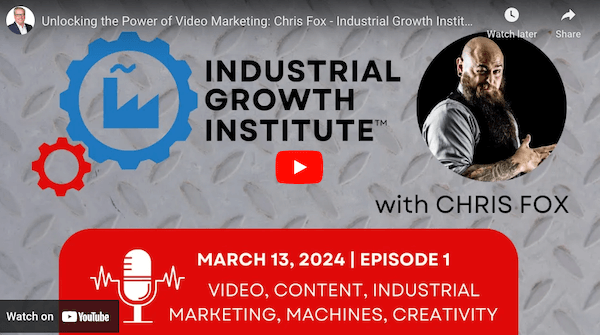
Chris Fox on Video, Content & Marketing for Manufacturers - Industrial Growth Institute Podcast Episode 1
Episode Recap
Summary
In this episode, Ed Marsh interviews Chris Fox, a content creator and consultant in the manufacturing engineering space. They discuss the importance of storytelling and creativity in content creation and marketing for manufacturers, as well as the value of imperfection and taking risks.
Chris shares his experience in creating engaging videos and emphasizes the need to focus on the spirit and story of a company rather than a history lesson. They also explore the role of editing in content creation and the importance of balancing artistic inclinations with deadlines.
Additionally, they discuss the best platforms for reaching manufacturing industry contacts and the use of video for aftermarket and customer success. Chris discusses:
- providing technical expertise to customers and the value of creating content that addresses their specific needs
- the impact of AI on video content and the challenges and limitations of using AI-generated video
- how companies can determine when to hire their own videographers and the benefits of building a consistent video production schedule
- his ideal clients and the qualities that make for successful collaborations
- the coolest machines he has shot and the art of telling stories about seemingly mundane industrial products
- insights and advice on creating effective video content for marketing in the manufacturing industry
- importance of creating a conversational atmosphere in interviews to make the subject feel comfortable and authentic.
- the value of getting past anticipation and nerves to have a smooth conversation on camera
- significance of telling the story of a product across its life cycle and the impact it can have on customers
- recommendations for extracting written content from video and building partnerships through video marketing
- the need to take a risk and invest in content creation to stand out in the manufacturing space
Takeaways
- Focus on the spirit and story of a company when creating videos, rather than a history lesson.
- Embrace imperfection and take risks in content creation to make it more engaging and memorable.
- Balance artistic inclinations with deadlines to ensure timely delivery of content.
- Publish videos natively on social media platforms to maximize reach and engagement.
- Differentiate content for various social media platforms to cater to the preferences and behaviors of the target audience.
- Utilize video for aftermarket and customer success to enhance customer satisfaction and retention.
Outline
00:00 Introduction and Background
02:00 Chris Fox's Background and Experience
03:23 Bourbonite and Other Creative Ventures
05:21 Balancing Creativity and Engagement
06:46 Taking Risks and Embracing the Unexpected
08:57 The Role of Editing in Content Creation
10:43 Creating Engaging Videos
13:20 The Value of Imperfect Content
14:16 The Importance of Storytelling
20:40 Balancing Artistic Inclinations and Deadlines
22:55 Publishing Videos on Social Media Platforms
26:09 Best Platforms for Reaching Manufacturing Industry Contacts
27:07 Differentiating Content for Various Social Media Platforms
27:57 Using Video for Aftermarket and Customer Success
28:19 Providing Technical Expertise to Customers
33:04 The Impact of AI on Video Content
36:19 Determining When to Hire Videographers
39:06 Ideal Clients for Video Production
43:28 The Coolest Machines to Shoot
45:44 Telling Stories About Industrial Products
49:34 The Importance of People in Videos
51:10 Preparing Engineers for On-Camera Interviews
52:09 Creating a Conversational Atmosphere
53:06 Getting Past Anticipation
54:25 The Life Cycle of the Product
55:20 Telling the Story Across the Product Life Cycle
57:33 The Value of Content in Marketing
58:25 Extracting Written Content from Video
01:00:14 Overcoming Obstacles to Filming
01:00:59 Getting Written Content from Video
01:02:47 Building Partnerships through Video
01:04:12 Collaborating with Clients and Partners
01:05:26 The Evolution of Sales and Marketing
01:07:02 Choosing the Best Airline
01:07:53 Equipment Recommendations on a Budget
01:08:59 Advice for Getting Started with Video Content
01:12:14 Taking a Risk with Content Creation
01:14:31 Opportunities in the Manufacturing Space 01:15:02 Competition in the Industrial Manufacturing Space
01:15:13 Favorite Bourbon: Eagle Rare
Wondering how video could fit into an integrated revenue growth framework for your company?
Check out the Overall Revenue Effectiveness™ Approach for more.